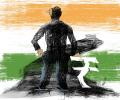
The employment situation remains dire. Whatever can be done to promote greater low-skill employment should be pursued aggressively, advises former chief economic adviser Shankar Acharya.

'Stay disciplined, and remain invested.' 'Volatile times are the best to invest in structural opportunities at the right price.'

Ahead of the upcoming budget, eminent economists during a meeting with Prime Minister Narendra Modi on Thursday urged the government to take steps to accelerate economic growth and improve infrastructure, sources said. The meeting was organised by the NITI Aayog on Thursday to elicit views and suggestions of economists for the first budget of the Modi 3.0 government. "Earlier today, interacted with eminent economists and heard their insightful views on issues pertaining to furthering growth," Modi said in a post on X.

'It would be difficult for us to run jails if it wasn't for murderers.'
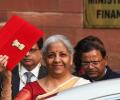
'... that it once again shies away from renewing its commitment to strategic divestment,' points out A K Bhattacharya.

'It took us 75 years to reach a per capita income of $2,730.' 'According to IMF projections, it will take only five years to add another $2,000.'
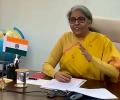
Finance Minister Nirmala Sitharaman on Friday presented the Economic Survey that details the state of the economy ahead of the government's Budget for fiscal year beginning April 1, 2021. The Economic Survey 2020-21, authored by a team led by Chief Economic Adviser Krishnamurthy Venkata Subramanian, details the state of different sectors of the economy as well as reforms that should be undertaken to accelerate growth.

'While on the one hand, terrorism continues to be a serious threat to global peace and security, on the other hand, areas such as cyber, maritime and space, are emerging as new theatres of conflict'

While other states are becoming competitive, Gujarat, say experts is not paying enough attention to maintaining its own position in terms of business reforms.
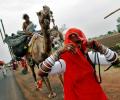
It is increasingly clear that Rajasthan, under the leadership of Chief Minister Vasundhara Raje, will lead the country in terms of policy reform.
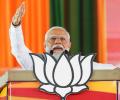
The BJP-led National Democratic Alliance's (NDA) slim majority in Lok Sabha may delay more far-reaching economic and fiscal reforms that could impede progress on fiscal consolidation, Moody's Ratings said on Wednesday. NDA securing a majority in the general elections will give a historic third term for Narendra Modi as Prime Minister of India. "We expect policy continuity, especially with regards to budgetary emphasis on infrastructure spending and boosting domestic manufacturing, to support robust economic growth.

'Consider 40% to 50% in equities, 10% in gold as a hedge, and the remaining 30% to 40% split between multi-asset funds and hybrid funds.'

The country's economy will start witnessing a growth of 6.5 to 7 per cent from fiscal 2023 onwards, helped by various reforms undertaken by the government so far and also as COVID-19 vaccination drive progresses, Chief Economic Advisor Krishnamurthy Subramanian said. He said the second wave of COVID-19 is unlikely to have a very significant on the economy. The country's economy contracted by 7.3 per cent in fiscal 2020-21. "Together with the reforms and focus on vaccination, I expect growth to start hitting close 6.5 to 7 per cent from FY23 onwards and accelerate from there on," Subramanian said at a virtual event organised by Dun & Bradstreet.

This Women's Day Week, we pay tribute to the extraordinary courage, resilience, and leadership of three iconic Indian queens -- Rani Lakshmibai of Jhansi, Rani Chennamma of Kittur, and Maharani Ahilyabai Holkar of Malwa.
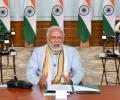
Whether it took the corona crisis to bring about the transformation, or otherwise, the change ought to be welcome, notes Virendra Kapoor.

United States President-elect Donald Trump's plan to overhaul the government with a new department headed by tech billionaire Elon Musk and Indian-origin entrepreneur Vivek Ramaswamy will be a biggest threat for China as it has to compete with far more efficient US political system, a policy advisor to the Chinese government said.
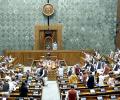
India's opposition parties have sharply criticized the Union Budget, calling it inadequate to address the country's economic woes and accusing the BJP-led government of using it to woo voters in Bihar and Delhi ahead of upcoming elections. Leaders from the Congress, TMC, DMK, SP, and CPI(M) voiced their disapproval, highlighting concerns over inflation, unemployment, and the lack of substantial measures to support the agricultural sector and the poor. They also criticized the tax cuts for the middle class as insufficient and coming too late after years of high taxes and rising prices.
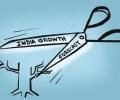
India's real GDP growth will decline marginally to 6.3 per cent in 2024 from the 6.4 per cent estimated for 2023, an American brokerage firm said on Monday. The next calendar year will be of two halves, wherein the government spending before the upcoming General Elections will be the key driver for growth, while after the elections, it will be the re-acceleration in investment growth, especially from the private sector, Goldman Sachs said in a report. From a fiscal year perspective, the brokerage said it expects growth to accelerate to 6.5 per cent for FY25 from the 6.2 per cent it has projected for the ongoing FY24, it added.
The government had earlier announced the country's highest civilian honour for L K Advani and Karpoori Thakur.
'I had to persuade him. I think he was a sceptic to begin with, but later on he was convinced that what we were doing was the right thing to do, that there was no other way out.'
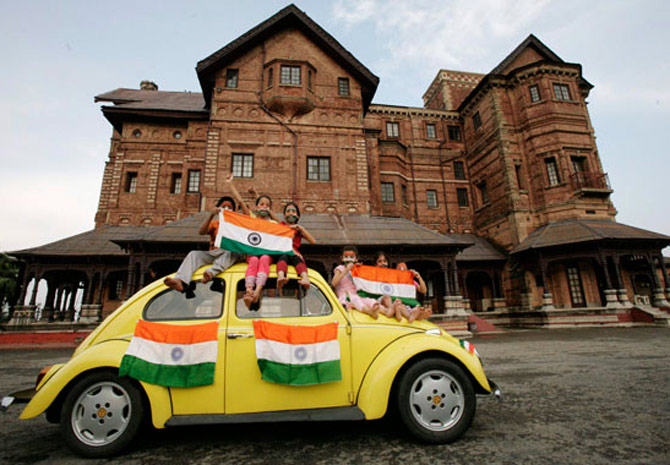
An ambitious long-term vision to ensure economic connectivity between India and the rest of Southern Asia is critical to India's trade policy objectives.
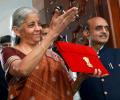
Finance Minister Nirmala Sitharaman will set a record by presenting the sixth Budget in a row -- 5 annual Budgets and one interim -- a feat achieved so far only by former Prime Minister Morarji Desai. With the presentation of interim Budget on February 1, Sitharaman will surpass the records of her predecessors like Manmohan Singh, Arun Jaitley, P Chidambaram, and Yashwant Sinha, who had presented five budgets in a row. Desai, as Finance Minister, had presented five annual Budgets and one interim Budget between 1959-1964. The interim Budget 2024-25 to be presented by Sitharaman on February 1, will be a vote-on-account that will give the government authority to spend certain sums of money till a new government comes to office after the April-May general elections.

Economist Deepak Nayyar says economic openness, while necessary, is not sufficient, and is conducive to development only when combined with industrial policy.

The Economic Survey released before next year's Budget could become a single volume, reverting to the practice followed till FY14. "There is so much to write about the Indian economy's performance in the past year. "Most of the exciting themes will be covered in what used to be considered Part II," said a senior government official who is part of the preparations for the Survey.

The defence minister also took an indirect dig at Gandhi for "doubting" the government's intention in the handling of the border row with China and said politics can not be done on the basis of "falsehood".

IMF believes it is mostly cyclical, not structural, but because of the financial sector issues, recovery will be not be quick. IMF said, it saw an opportunity with the strong mandate of the new government to reinvigorate the reform agenda to boost inclusive and sustainable growth.

Riding on a bull run, equity investors became richer by Rs 128.77 lakh crore in the 2023-24 fiscal, driven by robust fundamentals of the Indian economy, increased investment inflows and promising corporate earnings. After a muted performance in 2022-23, equity markets made a remarkable recovery in FY24, giving handsome returns to investors. The 30-share BSE Sensex climbed 14,659.83 points or 24.85 per cent in 2023-24.

'We need not worry about the market. If we do the right things, the market will come around,' says economist Raja Chelliah.
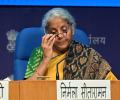
Finance Minister Nirmala Sitharaman is likely to hold pre-budget consultations with industry chambers on June 20, sources said. The budget for 2024-25 fiscal is likely to be presented in Parliament in the second half of July. Industry sources said the pre-budget consultation with Sitharaman would be preceded by a meeting with Revenue Secretary Sanjay Malhotra on June 18.

Gorbachev was the last leader of the Union of Soviet Socialist Republics (USSR).

Foreign investors continued their relentless selling in the Indian equity markets in August, offloading shares worth Rs 21,201 crore due to the unwinding of the yen carry trade, recession fears in the US and ongoing geopolitical conflicts. This came after an inflow of Rs 32,365 crore in July and Rs 26,565 crore in June, data with the depositories showed.

India has lodged a strong protest with Bangladesh over a now-deleted social media post by a key aide of Bangladesh's interim government that claimed certain areas of Indian territory should be part of that country. The post, which included a map showing parts of West Bengal, Tripura, and Assam as belonging to Bangladesh, was made by Mahfuz Alam, a de facto minister in the Muhammad Yunus-led interim government. The post sparked backlash and was subsequently deleted. India's External Affairs Ministry spokesperson Randhir Jaiswal reminded all concerned to be "mindful" of their public comments and emphasized the need for responsibility in public articulation.

'it's not just youth in India who are left behind because of their inability to find jobs; nearly two-thirds of Indian women of working ages do not participate at all in the paid labour force.'

Slamming the Budget, senior Congress leader P Chidambaram on Saturday said the Modi government was in complete denial that the economy faces a "grave macro economic challenge" and it has given up on reviving the economy, accelerating growth or creating jobs. There is nothing in the Budget that leads one to believe that growth will revive in 2020-21 and the claim of 6 to 6.5 per cent growth next year is "astonishing and even irresponsible", the former finance minister said at a press conference.

Till now, the maximum Bharat Ratnas were awarded in 1999 when four recipients were given the coveted award.

A way out of the economic slump is to revisit the template of 15 years ago and follow its constituents, recommends Ajay Shah.

Subhash said the Congress never gave respect to its own leaders and especially to Narasimha Rao who is known for his economic reforms in the country when he was prime minister.

'If there is a push towards a Marxist oriented government it will be dangerous.' 'We have seen this in Nepal and Myanmar and it will be a concern for India if it is surrounded by countries with such political dispensations.'

Six decades and more later, we are now captives of our identities. Every poll is based on elaborate calculations of electability of candidates on the basis of their castes and other narrow definers. That, along with voter promiscuity, is what defines our political culture, which remains stubbornly resistant to any change, asserts Shreekant Sambrani.
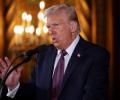
United States President-elect Donald Trump on Tuesday said that he understands the Russian feeling with NATO (North Atlantic Treaty Organisation) being on their doorstep.
